For traders who are done guessing
A process you can repeat on Monday.
Most new traders don't lose because they picked the wrong indicator. They lose because they have no process — no way to decide what to trade, where to enter, or how much to risk before the money is on the line. Miller's Academy teaches one, and gives you the tools to actually run it.
Already enrolled? Sign in to open the Trader's Bible.
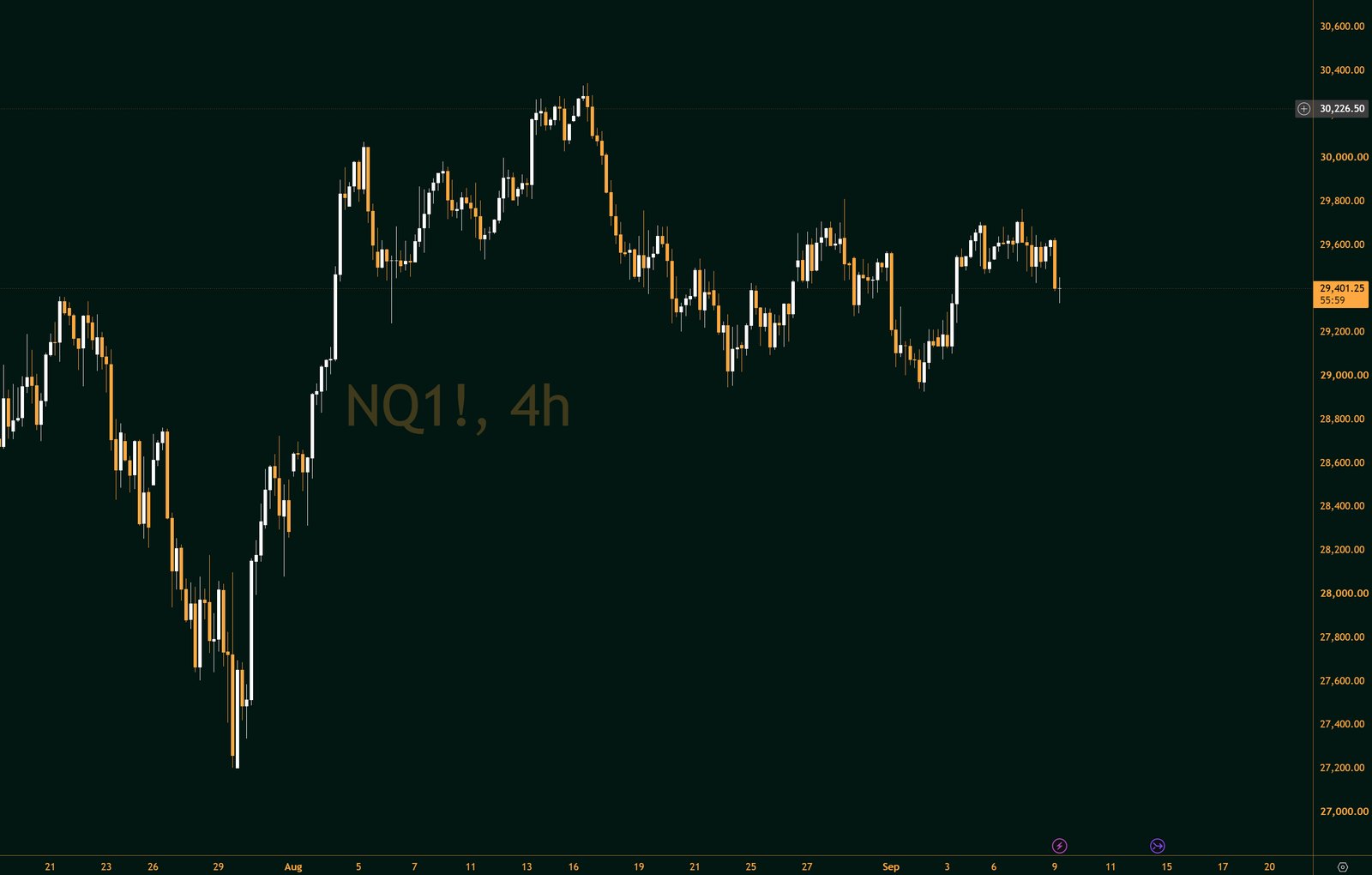
Real market data, no drawings on top of it — just price and structure, which is all you get at the open. Illustrative chart, not a trade recommendation.
Where do you want to start?
Four honest answers, depending on why you're here.The method in three steps, and the plain version of what trading education can and can't do for you.
→I want to join the next classStarts Saturday 17 October. Weekly live sessions for three months. Enrollment closes 14 October.
→Just looking for the toolsThe indicator package for NinjaTrader and TradingView, sold on its own.
→I have a question firstAsk before you buy. One person answers, usually the same day.
The method
Three things, in this order, every time.
There's nothing secret here. The edge isn't a hidden setup — it's doing the same three things in the same order until they stop being decisions and start being habits.
Top-down analysis
Start on the higher timeframe and work down. You should know what the market is doing before you ever look for an entry — not the other way around.
Structure and levels
Read what price has already told you: where it broke, where it defended, where liquidity is sitting. Levels drawn before the session, not chased during it.
Risk before entry
Position size and invalidation get decided first. If you can't say where you're wrong, you don't have a trade — you have a bet.
The tools
Built for the course, not bolted on.
Most courses hand you slides and wish you luck. Enrollment here comes with the software the process actually runs on.
Trader's Bible
The full reference: the Library for concepts, the Testing Room for working through setups, and the Desk for session routine. Searchable, and the thing you'll keep open while you trade.
Trade Journal
Log every trade with the reasoning behind it, review the pattern in your own mistakes, and sync across desktop and phone. Installs like an app.
Swing Scanner
Surfaces setups that fit the method on the timeframes we trade, with a minimum 45 days to expiration on options plays. Coming to enrolled students.
1-on-1 Coaching
Six private sessions on your charts, your setups and your own trade history. We review the journal between sessions, so the feedback is about what you actually did — not a generic syllabus.
See pricingIndicator Package
The tools I have on my own charts: liquidity pools, risk and reward levels, a VWAP rejection strategy and a trade manager that sizes from the money you're willing to lose. NinjaTrader 8 now, TradingView in development.
See what's includedThe course
The New Trader Series.
Charts are the easy part. What decides whether you're still trading in a year is risk, temperament, and what you do after a bad week — so that's what we spend the time on.
Next cohort starts Saturday 17 October. Live Saturdays at 12:00 pm ET, 60–90 minutes, for three months — every session recorded. Enrollment closes 14 October.
Decide what you can lose before you decide what to buy
Position size comes from the money you're willing to lose that day, not from how good the setup feels. Get this backwards and one trade can undo a good month.
An edge is a tendency, not a promise
Any single trade is close to a coin flip. Losing streaks are normal inside a working method — the job is to size so a run of losses is survivable and boring rather than fatal.
Why you break your own rules
Almost nobody fails from not knowing what to do. They fail from moving a stop, doubling down, or taking the trade they said they wouldn't. We name those moments so you can catch yourself in one.
What you do after a losing week
Revenge trading is the most expensive habit in this business. You'll get a written routine for stepping back, cutting size, and coming back to normal instead of trying to win it back today.
The same steps, in the same order, every time
Higher timeframe first, mark the levels that matter, size the position, then decide. Repeatable beats clever — a process you can run tired is worth more than one that needs a good day.
Numbers instead of impressions
You log every trade with the reasoning behind it, then review the pattern in your own mistakes. Memory flatters you; a journal doesn't.
Said plainly: this is a skill, not a shortcut. Most people who trade actively lose money, there's no signal group or indicator that changes that, and nobody here is going to show you a screenshot of a Lamborghini. What the course offers is a process you can repeat and the tools to measure yourself against it. The rest is your work.